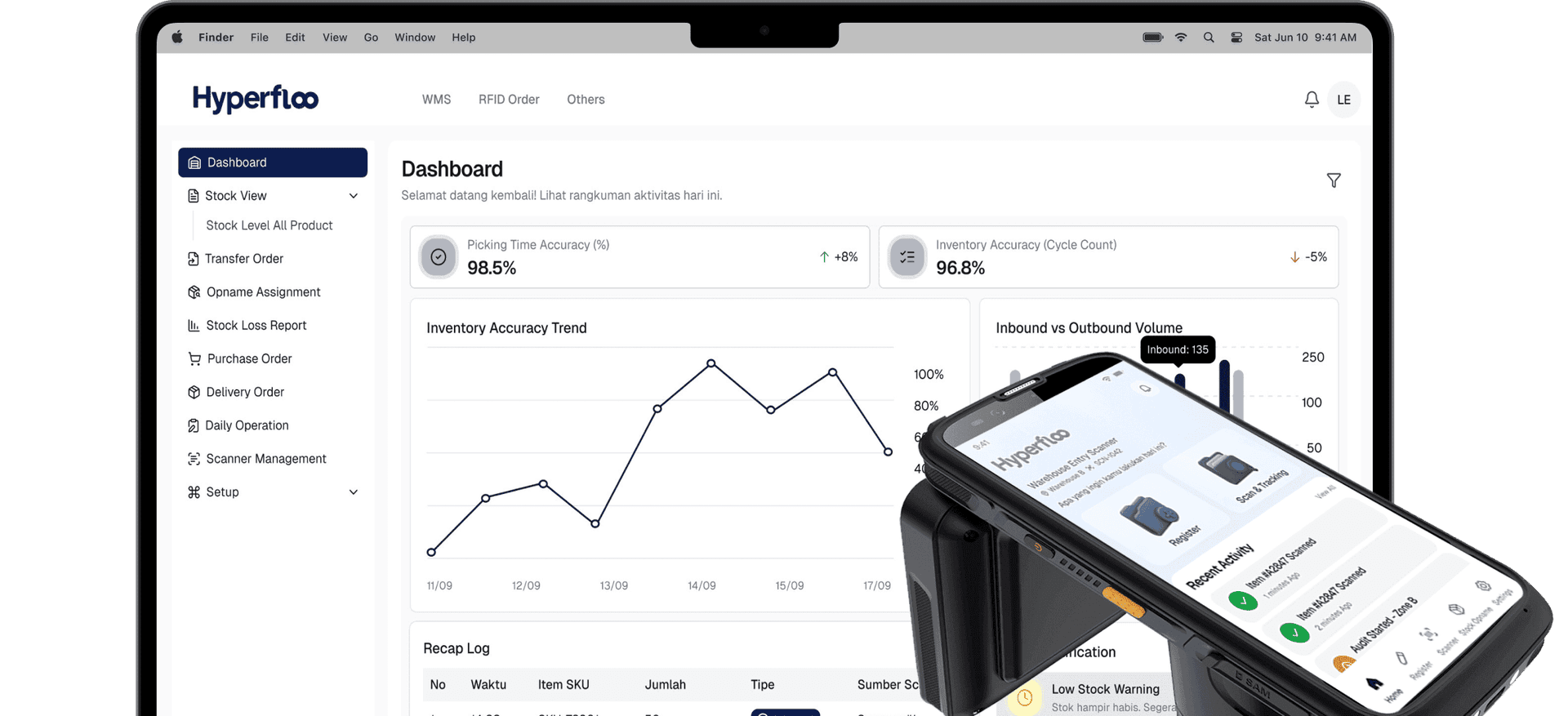

Advanced RFID & Smart Warehouse Solutions
Track Smarter. Operate Faster. Scale Seamlessly.
RFID is a “high-tech barcode” system that can be read from a distance without needing to be aimed one by one.
>95%
Improvement in inventory accuracy
15%
ROI within 12-24 months
>90%
Working hours can be saved for warehouse employees
80X
Increase in employee productivity

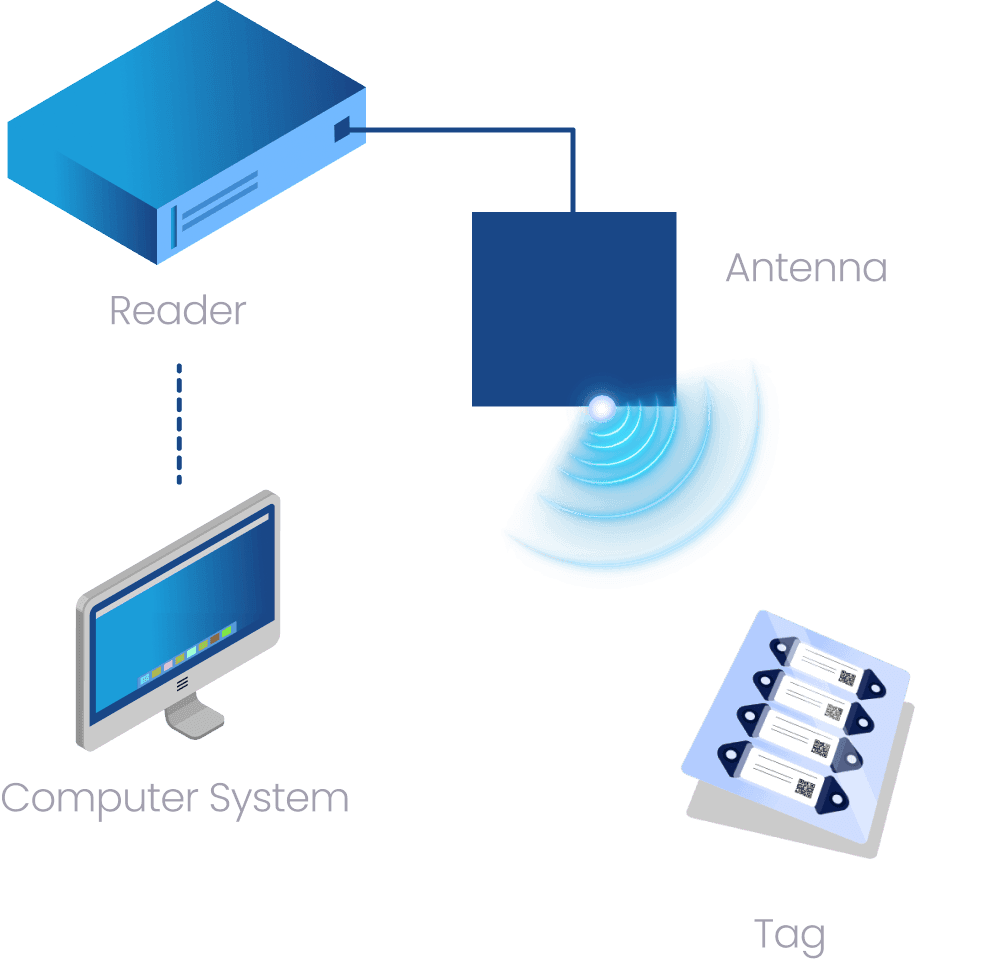
How RFID ecosystem works:
Time required to detect items
Items can be detected at one time
RFID scanners can be installed in rooms, doors, trucks, and even at cash registers.
“Directly, RFID can provide very accurate information about where an item is located in the supply chain, such as in a truck or at a specific store, and its position while at the store/warehouse.”
McKinsey & Company

48% of the world's manufacturing has already adopted RFID.
The end-to-end implementation of the RFID ecosystem has proven to automate inventory tracking processes throughout the supply chain from the factory to the store.

Case Study: Lululemon
The athletic apparel company Lululemon leverages product location information to deliver a more flexible and omnichannel order fulfillment model. They use RFID tags in nearly 500 of their stores, resulting in an inventory accuracy rate of up to 98 percent with a payback period of less than one year. During the COVID-19 pandemic, Lululemon utilized this location data to manage stock more precisely as customer demand fluctuated.

Case Study: Nike
In the early phase of the pandemic, Nike accelerated the implementation of RFID-based supply chain technology to track product movement in third-party managed manufacturing facilities. Nike also utilized demand forecasting analytics to assist in the production planning process. By shifting inventory from physical stores to digital sales channels and taking swift action to prevent stockpile across its network through product tracking with RFID, Nike managed to limit the sales decline to just 5%.
*Research by McKinsey & Company